Pakistan Agricultural Exports: Top Products in 2026
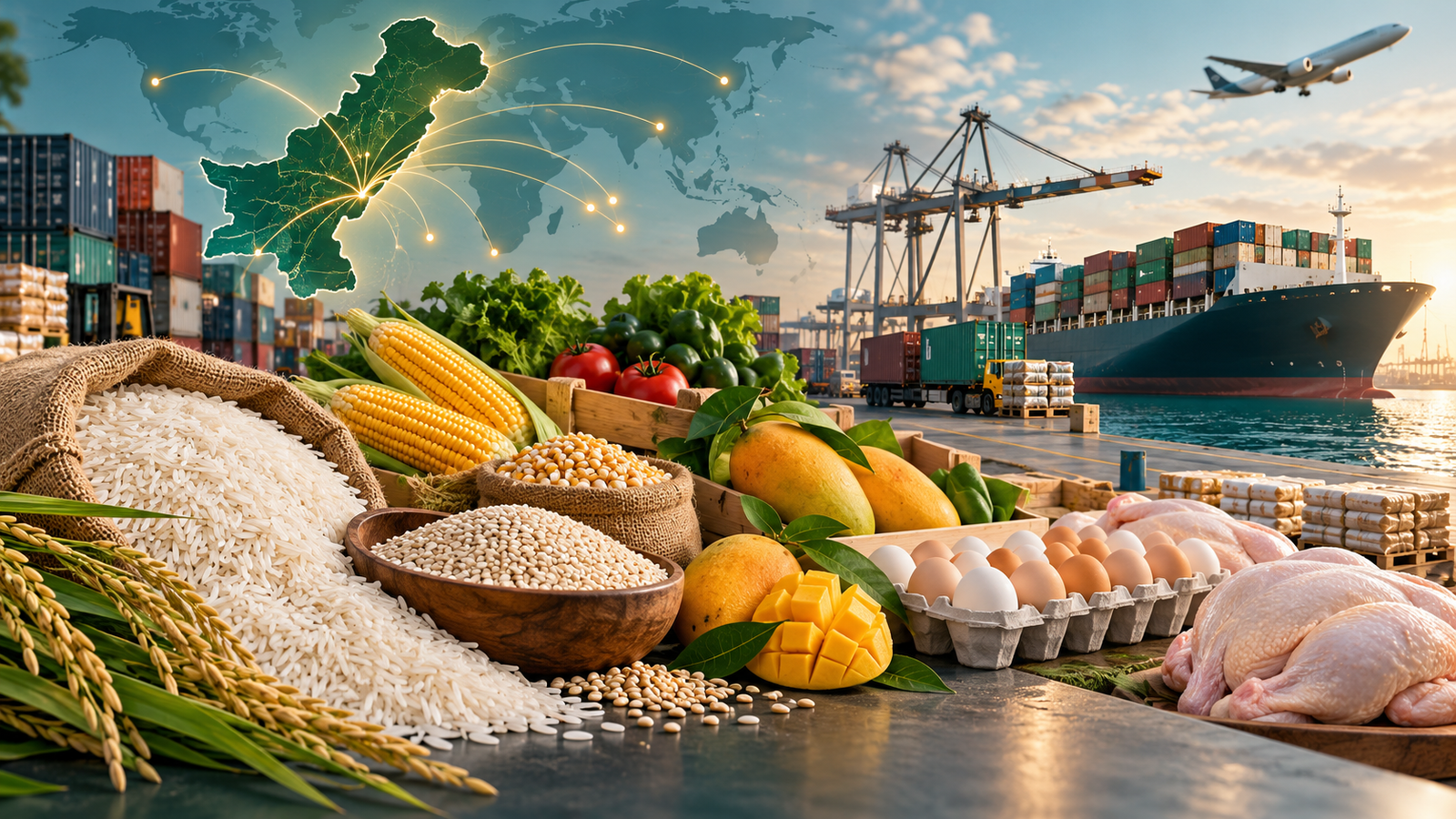
Pakistan agricultural exports are far more than rice. Its agricultural trade includes sesame seeds, corn, fruits, vegetables, meat, seafood, and table eggs. Each product serves a different market, with its own quality standards, packaging needs, and delivery requirements.
For businesses exploring Pakistan agricultural exports, understanding these differences is important before choosing a product or supplier. An importer purchasing sesame seeds for a bakery will have different requirements from a food distributor buying table eggs or a feed manufacturer sourcing corn.
Iqbal Group of Companies (IGC) operates across several parts of Pakistan’s poultry and agricultural sectors. Through Roomi Poultry, FieldFusion Corp., Poultry Links, and Avilac Solutions, the group has experience in food production, poultry operations, agricultural trade, and technical solutions for farming businesses.
This article examines Pakistan’s major agricultural export products using the latest available trade data. It also explains what international buyers should consider when comparing suppliers and highlights the capabilities that support Pakistan’s presence in global agricultural markets.
- Pakistan Agricultural Exports in 2026: What the Latest Data Shows
- Top Agricultural Products Exported From Pakistan
- 1. Rice: Pakistan's Largest Food Export Category
- 2. Sesame Seeds: Opportunities for Food Manufacturers
- 3. Corn (Maize): An Important Product for Feed and Food Industries
- 4. Table Eggs: Pakistan's Growing Presence in International Markets
- Roomi Poultry Limited: A Pakistani Egg Exporter With International Experience
- 5. Meat and Poultry Products: Opportunities in Halal Food Trade
- 6. Fruits: Mangoes, Citrus, and Dates
- 7. Vegetables: Potatoes, Onions, and Other Produce
- 8. Fish and Seafood: An Established Food Export Category
- 9. Rhodes Grass and Other Agricultural Commodities
- Which Agricultural Products Should International Buyers Source From Pakistan?
- How to Choose an Agricultural Export Supplier in Pakistan
- The Role of Processing and Market Readiness in Pakistan's Export Growth
- Iqbal Group of Companies and Pakistan's Agricultural Export Opportunities
- Frequently Asked Questions About Pakistan Agricultural Exports
- What Are the Main Agricultural Products Exported From Pakistan?
- Which Agricultural Product Generates the Highest Export Earnings for Pakistan?
- Does Pakistan Export Table Eggs?
- Can International Buyers Source Sesame and Corn From Pakistan?
- What Documents Are Required to Import Agricultural Products From Pakistan?
- How Can Buyers Contact Roomi Poultry for Egg Exports?
Pakistan Agricultural Exports in 2026: What the Latest Data Shows
Agriculture remains one of Pakistan’s largest economic sectors. According to the Pakistan Economic Survey 2025–26, agriculture contributed 23.44% of the country’s GDP and recorded growth of 2.89% during the fiscal year.
However, agricultural production and export earnings do not always move in the same direction.
Pakistan’s food-group exports declined by 29.49% during FY2025–26, reaching approximately US$5.02 billion, compared with US$7.12 billion in FY2024–25. The decline showed how changes in international demand, prices, and trade conditions can affect export performance.
More recent figures present a different picture. During July–September 2026, the first quarter of FY2026–27, Pakistan’s food-group exports reached US$1.388 billion, an increase of 25.32% compared with the same period in 2025.
According to the Associated Press of Pakistan, rice exports contributed significantly to this increase.
The figures suggest a recovery in export earnings during the first quarter, although three months of growth do not establish a full-year trend.
Major Agricultural and Food Export Categories
The following table shows selected food-group export categories during FY2025–26, based on Pakistan Bureau of Statistics figures reported by the Associated Press of Pakistan.
| Export category | Export value |
| Rice | US$2.29 billion |
| Meat and meat preparations | US$530.25 million |
| Fish and fish products | US$482.02 million |
| Fruits | US$308.13 million |
| Oilseeds and nuts | US$260.52 million |
| Vegetables | US$162.77 million |
Source: Associated Press of Pakistan, July 23, 2026, citing Pakistan Bureau of Statistics.
These figures cover selected categories within Pakistan’s food trade. They should not be treated as the complete value of agricultural exports, which can be defined more broadly.
Top Agricultural Products Exported From Pakistan
1. Rice: Pakistan’s Largest Food Export Category
Rice remains the country’s largest food export category by value. During FY2025–26, Pakistan exported approximately 4.28 million metric tonnes of rice worth US$2.29 billion.
Pakistan supplies basmati and non-basmati rice to buyers serving retail, wholesale, food service, and food processing markets.
Basmati rice is valued for its aroma and long grains. It is used by restaurants, food distributors, and retail brands serving customers who prefer aromatic rice. Non-basmati varieties offer options for bulk food supply, food manufacturing, and markets with different price and grain requirements.
For international buyers, the choice goes beyond selecting basmati or non-basmati rice. Grain length, moisture, broken-grain percentage, milling quality, and packaging all influence the final product.
A retail distributor may need branded consumer packs, while a wholesaler may prefer larger bags for bulk supply. These details should be confirmed before comparing quotations.
Pakistan’s rice sector also demonstrates why export earnings depend on market conditions. A country may produce a large quantity of rice, yet changes in international prices can affect the total value earned.
For buyers, a useful starting point is a written product specification that clearly states the variety, grade, quantity, and preferred delivery terms.
2. Sesame Seeds: Opportunities for Food Manufacturers
Sesame seeds have become an important product within Pakistan’s agricultural trade. They are used by bakeries, food processors, cooking-oil producers, and manufacturers of sesame-based foods.
According to World Bank WITS trade data, Pakistan exported approximately US$187.31 million worth of sesame seeds in calendar year 2025, with a reported quantity of around 164,000 metric tonnes.
China was the largest reported destination by value, followed by markets including South Korea, Kazakhstan, the United States, and the Netherlands.
Sesame is an example of how product preparation can affect commercial opportunities. International buyers do not always require the same type of seed.
Natural sesame, machine-cleaned sesame, color-sorted sesame, and hulled sesame serve different purposes.
For example, a bakery may use natural seeds as a topping, while a manufacturer producing tahini may require hulled sesame with specific cleanliness and quality standards.
Buyers should review moisture, purity, foreign material, color, and any food safety testing required by the destination market.
FieldFusion Corp., part of Iqbal Group of Companies, exports several sesame products within its export portfolio, including natural machine-cleaned, color-sorted, and hulled sesame seeds.
This range gives buyers the opportunity to discuss the product form that best matches their intended use.
For a sesame sourcing enquiry, clear details about the required grade, cleaning method, quantity, and destination can help the supplier assess the order.
3. Corn (Maize): An Important Product for Feed and Food Industries
Corn is widely used in Pakistan’s poultry and livestock feed industries. It also serves food processing and other industrial needs.
According to the Pakistan Economic Survey 2025–26, Pakistan produced approximately 8.79 million tonnes of maize during the fiscal year.
Export figures are different from production figures. World Bank WITS reports that Pakistan exported around US$107.46 million worth of maize, excluding seed, in calendar year 2025.
Sri Lanka and Vietnam were among the largest reported destinations, followed by Afghanistan, the Philippines, and Malaysia.
For businesses considering corn imports, one of the first decisions is whether the product will be used for animal feed or food processing.
Feed manufacturers commonly examine grain condition, moisture levels, broken kernels, and foreign material. Depending on the buyer’s requirements, testing for mycotoxins may also be important.
Mycotoxins are harmful substances produced by certain molds. Poor drying and storage conditions can increase the risk of contamination in grain products.
For this reason, buyers should discuss product testing, storage conditions, and shipment requirements before placing an order.
FieldFusion Corp. includes feed-grade corn in its agricultural export portfolio, making maize another relevant product for buyers exploring bulk sourcing opportunities through IGC’s international trade business.
4. Table Eggs: Pakistan’s Growing Presence in International Markets
Table eggs deserve particular attention because they represent an important development in Pakistan’s poultry export industry.
According to World Bank WITS, Pakistan exported approximately US$31.98 million worth of in-shell birds’ eggs in calendar year 2025, with a quantity of about 7.41 million kilograms.
The United Arab Emirates, Saudi Arabia, and the United States were the leading reported destinations by export value.
These figures cover the HS 040700 category, which includes fresh, preserved, and cooked birds’ eggs in shell. They should not be presented as figures for fresh table eggs alone.
Unlike dry grains, table eggs require careful handling because they can be damaged during grading, packing, storage, or transport.
Egg size, shell condition, freshness, packaging, and food safety requirements all matter when preparing products for international buyers.
The importing country’s animal health rules and other entry requirements must also be checked before a shipment is arranged.
Roomi Poultry Limited: A Pakistani Egg Exporter With International Experience
Roomi Poultry Limited (RPL), a flagship business of Iqbal Group of Companies, has an established history in table-egg exports.
The company’s export journey dates back to 2013, when it began supplying Pakistani table eggs to international markets.
Roomi Poultry’s business includes commercial layer farming, poultry feed production, and egg processing. This structure connects several important parts of egg production and preparation within the same company.
Its layer farming operations use automated equipment, while Dutch egg grading and processing technology supports cleaning, drying, polishing, and grading activities.
These systems matter because buyers need eggs prepared according to agreed product requirements. Grading and careful handling can help suppliers maintain consistency when preparing commercial orders.
RPL also received the Golden Egg Award in 2022, becoming the first Pakistani company to earn the recognition, according to its published company history.
Another milestone came in October 2025, when Roomi Poultry became the first Pakistani company to export table eggs to the United States, with reported shipments exceeding US$2.37 million.
This achievement gave Pakistan’s table-egg industry an important example of entry into a market with demanding import requirements.
For international buyers, RPL’s experience offers a basis for discussing commercial egg sourcing, product grades, packing, delivery conditions, and destination-specific requirements.
However, import approval, product specifications, and available supply must be confirmed for each enquiry. Previous export experience does not remove the need to meet current regulations.
5. Meat and Poultry Products: Opportunities in Halal Food Trade
Pakistan’s meat export sector serves international buyers seeking different types of meat products, including products intended for wholesale supply, retail, and food service.
During FY2025–26, exports of meat and meat preparations reached approximately US$530.25 million, according to Pakistan Bureau of Statistics figures.
This amount covers the broader meat category and should not be described as poultry exports alone.
For importers, meat sourcing requires close attention to product type, processing standards, halal requirements where applicable, and suitable temperature controls.
The needs of a frozen chicken distributor are different from those of a buyer sourcing chilled meat. Product size, packaging, shelf life, and the destination country’s entry requirements can affect the sourcing decision.
Within IGC, Poultry Links operates in poultry farming and primary chicken meat processing.
Its activities are relevant to the wider poultry supply chain, where production conditions, handling, and processing practices influence product quality.
Commercial buyers considering poultry products should request current product specifications and confirm the company’s available supply options and destination-market eligibility before discussing shipment arrangements.
6. Fruits: Mangoes, Citrus, and Dates
Pakistan’s fruit export sector includes well-known products such as mangoes, citrus fruits, and dates.
During FY2025–26, the country exported approximately US$308.13 million worth of fruits.
Mangoes are associated with seasonal demand in overseas markets. Buyers consider the variety, fruit size, ripeness, and condition when placing orders.
Kinnow and other citrus products also serve international markets, where grading, suitable packaging, and transportation play an important role.
Dates offer a different type of opportunity. They can be sold as consumer products or supplied as ingredients for food manufacturing and processing.
For fresh produce, timing is especially important. Fruit can meet the required grade at packing but lose quality if it is stored incorrectly or delayed during transport.
The Trade Development Authority of Pakistan identifies better infrastructure, improved quality practices, and reduced losses after harvest as important areas for developing the country’s fruit and vegetable exports.
International buyers should therefore discuss seasonal availability, packing methods, required plant health documents, and delivery arrangements before confirming an order.
7. Vegetables: Potatoes, Onions, and Other Produce
Vegetables are another established part of Pakistan’s agricultural trade.
Pakistan exported approximately 594,104 metric tonnes of vegetables worth US$162.77 million during FY2025–26.
Potatoes, onions, and other vegetables serve wholesalers, fresh food distributors, and processors, depending on market conditions and available supply.
Product size, grading, freshness, and packaging affect how suitable a shipment is for the buyer.
A wholesale distributor may need products packed for handling at a central market, while a processor may require a particular grade or size for its production line.
Buyers also need to consider the shelf life of each product. Some vegetables can be stored for longer periods under suitable conditions, while others require faster movement through the supply chain.
Exporters must check the importing country’s plant health requirements, including inspection or treatment conditions where relevant.
Clear communication about product condition and expected delivery time can help reduce misunderstandings after dispatch.
8. Fish and Seafood: An Established Food Export Category
Pakistan has an established fish and seafood export sector supported by its coastline and fisheries industry.
During FY2025–26, Pakistan exported approximately 215,170 metric tonnes of fish and fish products worth US$482.02 million.
International seafood buyers may source different fish species and product forms, including frozen and processed products.
The requirements vary according to the product, buyer, and destination market.
For example, a processor buying frozen fish may need specific sizes and packing formats. A food service distributor may require different product specifications.
Cold storage, food safety documents, and controlled shipping conditions are important because seafood products are sensitive to temperature changes.
Before sourcing seafood from Pakistan, buyers should confirm the product species, processing method, storage requirements, available certificates, and delivery conditions.
9. Rhodes Grass and Other Agricultural Commodities
Pakistan also participates in agricultural trade beyond the country’s largest food export categories.
Rhodes grass hay is one such product. It is used as fodder for livestock, including dairy animals, and can be supplied to overseas markets where demand exists.
For livestock feed buyers, the product’s moisture level, fiber content, bale size, and storage conditions are important.
Other agricultural products, such as spices and selected oilseeds, serve different commercial markets and may require specific processing or quality checks.
FieldFusion Corp. also exports Rhodes grass hay within its export portfolio, alongside rice, sesame seeds, and corn.
Although these products may not match the export value of Pakistan’s largest food categories, they provide opportunities for buyers with more specific sourcing needs.
For commercial importers, the product’s suitability matters more than its position in a national export ranking.
Which Agricultural Products Should International Buyers Source From Pakistan?
The most suitable agricultural product depends on the buyer’s market, intended use, and purchasing requirements.
A food manufacturer may focus on raw material quality and processing needs. A distributor may place greater attention on packaging, shelf life, and repeat supply.
The following comparison provides a starting point for commercial sourcing decisions.
| Product | Common buyers | Important sourcing requirements |
| Basmati rice | Retail distributors, restaurants | Variety, aroma, grain quality, packaging |
| Non-basmati rice | Wholesalers, food processors | Grade, broken grains, quantity |
| Sesame seeds | Bakeries, tahini producers | Purity, cleaning method, moisture |
| Corn | Feed mills, food processors | Grade, moisture, grain condition |
| Table eggs | Distributors, food service buyers | Size, grading, freshness, packing |
| Poultry meat | Wholesalers, food service companies | Processing standards, temperature, required documents |
| Mangoes and citrus | Fresh produce distributors | Season, grading, ripeness, shelf life |
| Vegetables | Wholesalers, food processors | Size, condition, packaging |
| Rhodes grass | Dairy and livestock feed buyers | Moisture, bale size, feed quality |
This table is a general buying guide. Final specifications should always be confirmed for the product and destination market.
How to Choose an Agricultural Export Supplier in Pakistan
Finding a supplier is only one part of an international sourcing decision. Buyers also need confidence that the product and proposed shipment meet their requirements.
The following areas deserve attention before an importer confirms a commercial order.
Start With the Product Specification
A written product specification helps buyers compare quotations on the same basis.
For rice, that may include variety, grade, grain length, and broken-grain percentage. For sesame, the important details may be moisture, purity, and the cleaning method.
For table eggs, the specification may include weight range, grade, packing format, and delivery requirements.
Without these details, two quotations may appear to offer the same product even when the quality or preparation differs.
Suppliers and buyers should confirm the specification before agreeing on the final commercial terms.
Review Quality Checks and Required Documents
Agricultural exports may require product testing, inspections, or certificates depending on the destination market.
For plant products, Pakistan’s Department of Plant Protection explains the steps involved in meeting the importing country’s plant health requirements.
These may include an import permit, inspection, treatment where required, and a phytosanitary certificate.
A phytosanitary certificate is an official document used to confirm that a plant shipment meets the applicable plant health requirements.
Eggs, meat, and other animal products follow different health and import rules. Importers should check these with the relevant authorities for their destination country.
Buyers should also agree on the documents the supplier will provide, rather than leave these arrangements until the shipment is ready.
Check Storage, Packaging, and Transport Arrangements
Agricultural products do not all travel under the same conditions.
Grains and seeds generally need protection from excess moisture and contamination. Fresh produce requires attention to shelf life and suitable transport conditions.
Eggs need protective packaging and careful handling, while frozen poultry products require temperature-controlled storage and shipping.
These differences affect both the cost and the practical planning of an order.
A supplier should be able to explain the proposed packaging and delivery arrangements for the product being purchased.
Agree on Quantity, Delivery Terms, and Inspection
Before placing an order, buyers should confirm the required quantity, destination port, preferred shipment period, and commercial delivery terms.
International trade terms such as FOB and CIF affect the responsibilities of the buyer and seller. Importers should confirm which costs and risks are covered by the agreed term.
If independent inspection is required, both parties should agree on who will arrange it and when it will take place.
Clear agreements help avoid disputes caused by different expectations about quality, documents, and delivery.
Assess the Supplier’s Product Experience
Agricultural trade requires an understanding of the product and its intended market.
A supplier experienced in bulk grain trade may have different capabilities from a company focused on fresh produce or poultry products.
Buyers should therefore assess the supplier against the category they intend to purchase.
For example, an importer sourcing sesame should discuss the required cleaning method and available grades. A buyer purchasing eggs should review the supplier’s grading, packing, and export experience.
Relevant experience gives buyers useful information when deciding whether a supplier is suitable for their requirements.
The Role of Processing and Market Readiness in Pakistan’s Export Growth
Pakistan has the agricultural production base to serve several international markets, but earning more from that production also depends on how products are prepared and sold.
Cleaning, grading, packing, storage, and processing can help agricultural products meet the needs of different buyers.
For some products, local processing can create opportunities to sell prepared goods rather than raw materials. For others, better handling and storage may help protect the product’s condition during a longer journey.
Technology can support these activities through monitoring, record-keeping, product tracking, and improved planning.
However, investment decisions should be guided by actual market requirements. A processing facility creates commercial value when it can produce goods that buyers need at a cost they are willing to pay.
In September 2026, Pakistan’s Ministry of Planning called for greater attention to value-added, certified, and branded agricultural exports.
The discussion reflects a wider challenge for Pakistan’s agricultural economy: developing the facilities, skills, and trade connections required to serve more demanding markets.
For exporters, market readiness means understanding the product standards, documents, handling conditions, and delivery expectations before accepting an order.
For buyers, it means choosing suppliers whose capabilities match the product being sourced.
Iqbal Group of Companies and Pakistan’s Agricultural Export Opportunities
Pakistan’s agricultural exports serve a wide range of international buyers, including food manufacturers, wholesale distributors, retailers, and livestock feed businesses.
The country exports products with very different commercial requirements. Rice and sesame buyers focus on grain quality and processing needs. Fresh produce buyers must consider shelf life and transport conditions. Egg and meat importers also need to assess handling, food safety, and destination-specific requirements.
These differences explain why agricultural trade requires practical product knowledge and careful planning.
Iqbal Group of Companies has built a business presence across several important areas of Pakistan’s poultry and agricultural sectors through four specialized companies.
Roomi Poultry Limited operates in layer farming, poultry feed production, and egg processing. Its international egg business, modern grading technology, and reported entry into the United States market in 2025 demonstrate the role Pakistani poultry businesses can play in developing export opportunities.
FieldFusion Corp. focuses on agricultural sourcing and international trade. Its portfolio includes rice, sesame seeds, corn, Rhodes grass, and other commodities. The company works with international buyers seeking agricultural products from Pakistan.
Poultry Links operates in poultry farming and primary chicken meat processing, supporting the group’s presence in poultry production and food supply.
Avilac Solutions supplies imported animal nutrition, health, and technical products to Pakistan’s poultry, dairy, and livestock sectors. Its role supports agricultural and livestock businesses through access to international products and technical solutions.
Together, these businesses connect IGC with production, animal nutrition, processing, and international agricultural trade.
For international buyers, the next step is to discuss the required product and assess whether the relevant IGC business can meet the sourcing requirements.
Explore Agricultural Sourcing Opportunities With IGC
Iqbal Group of Companies welcomes enquiries from international importers, food manufacturers, wholesale distributors, and potential business partners.
For agricultural commodities, buyers can explore the product portfolio of FieldFusion Corp. For table-egg sourcing, Roomi Poultry Limited provides a direct connection to IGC’s egg business.
When contacting the group, include the product name, required grade, estimated quantity, destination country, packaging needs, and preferred delivery period.
These details will help the relevant business team review the enquiry and discuss possible supply arrangements.
Iqbal Group of Companies
Website: https://iqbalgroup.com
Email: info@iqbalgroup.com
FieldFusion Corp.
Website: https://fieldfusioncorp.com
Email: info@fieldfusioncorp.com
Roomi Poultry Limited
Website: https://roomipoultry.com
Email: info@iqbalgroup.com
Poultry Links
Website: https://poultrylinks.com
Email: info@iqbalgroup.com
Avilac Solutions
Website: https://avilacsolutions.com
Email: info@iqbalgroup.com
Contact IGC to discuss agricultural sourcing, table-egg exports, and international business opportunities.
Frequently Asked Questions About Pakistan Agricultural Exports
What Are the Main Agricultural Products Exported From Pakistan?
Pakistan’s major agricultural and food export products include rice, meat and meat preparations, fish and seafood, fruits, vegetables, and oilseeds. Other internationally traded products include sesame seeds, corn, table eggs, spices, and fodder. Their export values differ by category and reporting year.
Which Agricultural Product Generates the Highest Export Earnings for Pakistan?
Rice was Pakistan’s largest food export category during FY2025–26, with reported earnings of approximately US$2.29 billion. The category includes basmati and non-basmati rice, which serve different markets and customer needs.
Does Pakistan Export Table Eggs?
Yes. Pakistan exports table eggs to international markets. World Bank WITS reported US$31.98 million in exports of in-shell birds’ eggs during calendar year 2025, a broader category that includes table eggs. Roomi Poultry Limited has an established table-egg export business and was reported as the first Pakistani company to export table eggs to the United States in 2025.
Can International Buyers Source Sesame and Corn From Pakistan?
Yes. Both sesame and maize are established export products. World Bank WITS reported approximately US187.31 million in sesame exports and US107.46 million in maize exports, excluding seed, during 2025. FieldFusion Corp., part of IGC, exports these products as part of its agricultural export portfolio.
What Documents Are Required to Import Agricultural Products From Pakistan?
The documents depend on the product and importing country. Common commercial documents include an invoice, packing list, and transport documents. Plant products may require a phytosanitary certificate, while animal products may require different health certificates and approvals. Importers should confirm the rules with the relevant authorities before shipment.
How Can Buyers Contact Roomi Poultry for Egg Exports?
International buyers can contact Roomi Poultry Limited through its official website or Iqbal Group of Companies. An enquiry should include the required egg grade, quantity, packing format, destination market, and expected delivery period. Current availability and export eligibility must be confirmed with the company.

Recent Posts
Pakistan Agricultural Exports: Top Products in 2026
What International Buyers Expect From Export Suppliers in 2027