Integrated Supply Chain: Improving Export Reliability
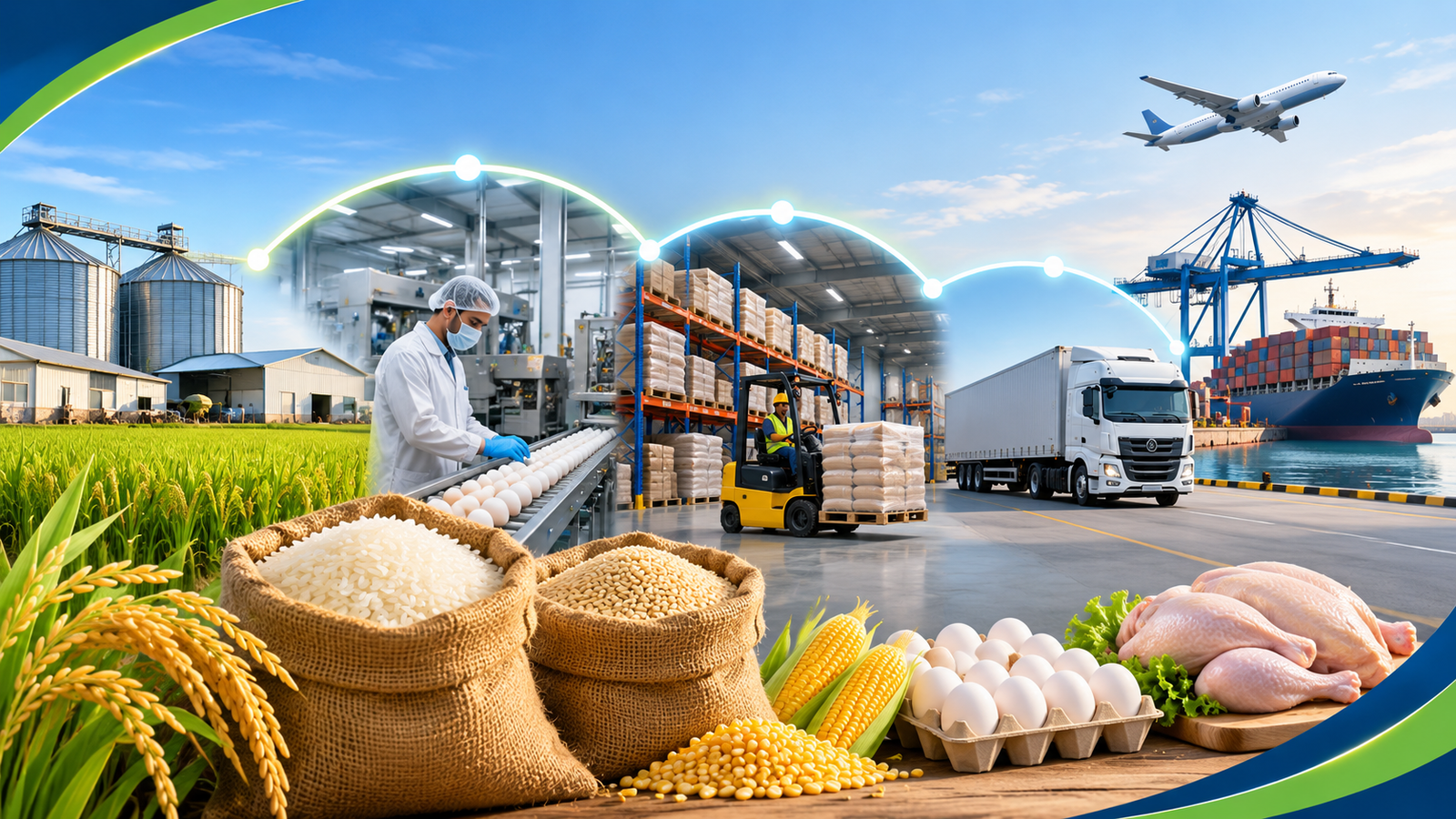
Export reliability depends on more than getting products ready for shipment. For agricultural and food exporters, an integrated supply chain connects production, quality checks, storage, documentation, and transportation to help goods reach international buyers as agreed.
When these activities are managed separately, even a small delay can affect the entire shipment. A change in production schedules, poor storage conditions, or incomplete documents can lead to additional costs and delivery problems. Such issues can also affect a buyer’s confidence in the supplier.
For exporters dealing in rice, sesame, eggs, poultry products, and other agricultural commodities, better coordination across the supply chain can improve product handling and shipment planning. It also helps businesses identify risks earlier and respond before problems affect delivery. This article explains how integrated supply chains improve export reliability, support consistent quality, and help exporters meet the requirements of international markets.
- What Is an Integrated Supply Chain?
- Why Is Export Reliability Important for International Buyers?
- How an Integrated Supply Chain Improves Export Reliability
- Integrated vs Traditional Supply Chains: Key Differences
- Why Integrated Supply Chains Matter for Agricultural Exports
- How Technology Supports Integrated Supply Chain Management
- How Exporters Can Build a More Reliable Integrated Supply Chain
- How to Measure Integrated Supply Chain Performance
- Common Challenges in Integrated Supply Chain Management
- The Role of Iqbal Group of Companies in Integrated Agribusiness
- FAQs
- What is an integrated supply chain?
- How does an integrated supply chain improve export reliability?
- Why is supply chain integration important for agricultural exports?
- What is the difference between supply chain management and supply chain integration?
- Can an integrated supply chain guarantee on-time export delivery?
What Is an Integrated Supply Chain?
An integrated supply chain is a connected system in which sourcing, production, quality control, warehousing, logistics, and delivery teams work with shared information and clear responsibilities. Each department has its own work, but its decisions also affect other parts of the business. When information moves smoothly between departments, companies can prepare orders more accurately and manage possible delays.
For example, an agricultural exporter receives an order for 200 tonnes of rice. The sourcing team must confirm product availability, the processing team must prepare the required grade, and the quality department must check whether the goods meet the buyer’s specifications. The warehouse and logistics teams then coordinate packing, loading, and transportation.
In a connected supply chain, these teams follow the same confirmed order requirements. If processing capacity becomes limited or the shipment date changes, the relevant departments can adjust their plans before the issue affects the customer. The purpose is to make the movement of goods more predictable while improving coordination between the people responsible for each stage.
How Does Supply Chain Integration Work?
Supply chain integration depends on effective planning, information sharing, and agreed operating procedures. Companies need to know what products are available, what customers require, and which activities must be completed before dispatch. This does not mean that one company must own every stage.
An exporter can work with independent farmers, processing facilities, warehouses, transport companies, and shipping agents while maintaining a coordinated system. The important factor is whether the business has enough information and control to manage customer requirements and respond when problems occur.
Why Is Export Reliability Important for International Buyers?
Export reliability refers to a supplier’s ability to deliver products according to agreed specifications, quantities, conditions, and delivery schedules. International buyers depend on these commitments because they often manage their own warehouses, distribution networks, production schedules, and customer orders. An unexpected delay may disrupt several business activities.
For example, a distributor expecting an agricultural shipment on a confirmed date may have already committed stock to customers. If the goods arrive late, the distributor could face shortages or additional storage and transport costs. Quality failures create similar problems. Products that do not meet agreed standards may require further inspection, replacement, or rejection. These risks explain why international buyers assess suppliers on more than product prices. They also consider delivery history, quality systems, documentation, communication, and the ability to handle unexpected situations.
The World Bank’s Connecting to Compete 2025: The New Logistics Performance Indicators 2.0, published in April 2026, examines the speed, connectivity, and reliability of international logistics using shipment-level data. The report highlights how delays at ports, border points, and transport connections can make international trade less predictable. It reinforces the importance of stronger logistics planning and effective coordination.
How an Integrated Supply Chain Improves Export Reliability
1. Better Planning Before Production and Sourcing
A dependable export shipment begins with accurate order planning. Before committing to a customer, exporters need to understand the required product, quantity, quality specifications, packaging, and delivery terms. An integrated supply chain helps departments compare customer requirements with production capacity, available stock, and planned shipment dates.
For example, a company exporting sesame seeds must confirm whether the required quantity can be sourced, cleaned, tested, and packed within the agreed schedule. If these decisions are made without coordination, the business may discover problems after accepting the order. Better planning allows exporters to identify such limitations earlier and communicate realistic delivery commitments. It also helps businesses prepare for seasonal changes in agricultural production, when product availability and quality may vary.
2. Consistent Quality Across the Supply Chain
Product quality is one of the most important factors in international trade, particularly for agricultural and food exports. Quality can be affected at several stages, including sourcing, processing, packaging, storage, and transportation. Even when a product meets the required standards during production, poor handling can affect its condition before delivery.
An integrated supply chain connects quality checks with the wider shipment process. Teams can confirm product specifications, record inspection results, and identify batches that require further attention. For example, rice and sesame exporters may need to monitor moisture, cleanliness, grading, and packaging requirements. Egg exporters must pay attention to grading, handling, product condition, and storage requirements. Poultry products require suitable food safety and temperature controls according to their form and destination market.
When the relevant departments follow agreed quality procedures, exporters are better placed to identify problems before the shipment leaves their control. The International Organization for Standardization provides guidance on traceability through ISO 22005:2007, which explains the basic requirements for tracing products and their components through the feed and food chain.
3. Improved Storage and Product Handling
Agricultural products can lose quality when storage and handling conditions are poorly managed. Moisture, temperature changes, contamination, and physical damage may affect goods before they reach the international market. An integrated supply chain helps warehouse teams work with sourcing, quality, and logistics departments to maintain suitable product conditions.
Warehouse staff need to know which products are ready for dispatch, which batches require inspection, and how goods should be stored or loaded. Logistics teams also need this information when arranging transportation. This coordination becomes particularly important for food products that require temperature control or special handling.
According to the Food and Agriculture Organization of the United Nations (FAO), an estimated 13.4% of food produced globally is lost after harvest and before reaching retail. This figure covers the wider food supply chain and is not specific to export shipments. The FAO findings highlight the importance of reducing losses during post-harvest handling, storage, and transportation. For exporters, better storage planning can support product quality, reduce avoidable losses, and improve the handling of customer orders.
4. Better Coordination Between Logistics and Export Teams
Export logistics involves several activities that must be completed in the correct order. Products need to be prepared, packed, transported, and supported by the required shipping and customs documents. A problem in one activity can affect the others. For example, a logistics team might arrange a container before the product is ready. Alternatively, goods may reach the port while important documents are still being prepared. These situations can lead to delays, additional costs, and changes to the delivery schedule.
An integrated supply chain improves coordination by keeping the relevant departments informed about shipment readiness. The export team can confirm documentation requirements earlier, while warehouse and logistics teams can prepare loading and transportation arrangements based on actual product availability.
The World Trade Organization’s Trade Facilitation Agreement supports improvements in customs procedures, including the advance submission of documents and simpler import and export requirements. These measures are intended to reduce unnecessary delays and make international trade procedures more efficient.
5. Greater Visibility and Shipment Tracking
Supply chain visibility means having access to useful information about products, inventory, orders, and shipment progress. Exporters need this information to understand whether an order is moving according to plan and whether any action is required.
For example, an export manager should be able to confirm that the product has completed quality checks, the correct quantity has been packed, and the shipment has been handed over to the transport provider.
Without reliable updates, problems may remain unnoticed until the buyer asks about the delivery. Digital systems can help businesses manage these activities through inventory records, batch tracking, shipment updates, and shared order information. However, technology is useful only when the information is accurate, and employees understand how to use the system.
6. Faster Response to Unexpected Disruptions
Export shipments can face unexpected challenges even when the original plan is carefully prepared. Bad weather, equipment problems, port congestion, shipping delays, and transport shortages may affect delivery schedules. Some of these issues are outside an exporter’s direct control.
An integrated supply chain helps departments understand how a disruption affects the entire order. If transport is delayed, the logistics team can inform the export department, the warehouse can review storage needs, and the commercial team can update the buyer.
When suitable alternatives are available, the business may also consider changes to transportation or delivery arrangements. This level of coordination helps exporters respond more quickly and communicate accurately, even when a problem cannot be resolved immediately.
Integrated vs Traditional Supply Chains: Key Differences
The difference between a traditional, less connected supply chain and an integrated model becomes clearer when comparing daily operations. The comparison below shows how shared planning and timely updates can change the way teams prepare an export order.
| Business Area | Less Connected Supply Chain | Integrated Supply Chain |
| Planning | Departments work separately | Teams follow shared order requirements |
| Quality Control | Checks may be limited to individual stages | Quality information is linked across stages |
| Inventory | Stock updates may be delayed | Relevant teams receive updated stock information |
| Logistics | Transport arrangements may be made late | Logistics planning begins earlier |
| Documentation | Errors may appear close to dispatch | Documents are reviewed throughout preparation |
| Communication | Information may move slowly between departments | Teams share relevant updates |
| Problem Resolution | Departments address problems separately | Teams coordinate their response |
| Customer Updates | Buyers may receive delayed information | Exporters can provide more accurate shipment updates |
An integrated supply chain gives businesses a more complete view of their operations. However, its effectiveness depends on the quality of planning, employee training, supplier performance, and management decisions. Integration alone cannot guarantee successful deliveries, but it can help reduce avoidable problems.
Why Integrated Supply Chains Matter for Agricultural Exports
Agricultural exports involve specific challenges because product availability, quality, and handling requirements can change with seasons and market conditions. Unlike many manufactured goods, agricultural products may be affected by moisture, storage conditions, temperature, and the time spent between production and delivery. Exporters must also consider the quality standards and regulations of destination markets.
For example, a rice exporter may need to arrange grading, processing, packing, and shipment according to the buyer’s requirements. A poultry exporter may need to maintain suitable hygiene and temperature controls throughout processing, storage, and transportation. When these activities are connected, the exporter can prepare products more accurately and identify risks before goods reach the international market.
The Role of Traceability in Agricultural Supply Chains
Traceability is the ability to follow a product through the relevant stages of production, processing, and distribution. It helps businesses identify where products came from, how they were handled, and which shipments contain a particular batch.
The FAO explains that traceability supports food safety by helping businesses identify and locate products when quality or safety concerns arise. For example, if a problem is discovered in a food shipment, accurate batch records can help the exporter identify the affected goods and investigate the cause. This is particularly important for agricultural and poultry products, where product history and handling conditions may be relevant to buyer requirements.
How Integrated Supply Chains Support Pakistan’s Export Potential
Pakistan has business opportunities across agricultural commodities, poultry products, and processed food. However, entering international markets requires more than sufficient production. Exporters must also meet buyer expectations for product specifications, supply consistency, documentation, and delivery.
An integrated supply chain helps connect these requirements with the work taking place at farms, processing facilities, warehouses, and transport operations. For example, a business exporting sesame seeds can improve its order planning by linking sourcing schedules with cleaning, grading, storage, and shipment preparation.
Similarly, exporters involved in eggs and poultry products can benefit from coordinated quality checks, product handling, and logistics planning. These improvements can help Pakistani businesses prepare more dependable shipments and strengthen their position when dealing with international buyers.
How Technology Supports Integrated Supply Chain Management
Technology can improve coordination by helping businesses collect, update, and share information more efficiently. Inventory management systems, digital quality records, shipment tracking platforms, and shared order systems can reduce delays caused by missing or outdated information.
For example, a warehouse employee can update an order’s packing status in a shared system. The logistics department can then use that information to arrange transport without waiting for repeated manual updates. Digital records can also help businesses review past shipments and identify recurring issues. However, introducing software without improving the underlying process may create additional problems. Businesses need clear responsibilities and accurate information before technology can deliver meaningful benefits.
Why People and Processes Still Matter
Supply chain performance depends heavily on the people responsible for each activity. Employees must understand product requirements, follow approved procedures, maintain accurate records, and report problems when they occur. A well-designed system becomes ineffective if information is not updated or departments fail to communicate.
For this reason, training, accountability, and clear operating instructions are essential parts of supply chain integration. Technology can make information easier to access, but employees and management remain responsible for the decisions made using that information.
How Exporters Can Build a More Reliable Integrated Supply Chain
Exporters do not need to change their entire business structure at once. Supply chain integration can begin with practical improvements in the way departments plan and manage orders.
Review the Complete Order Process
Businesses should examine how an order moves through sourcing, production, quality control, storage, logistics, and delivery. This helps identify unnecessary delays, missing information, and activities that require better coordination.
Establish Shared Quality Standards
Product specifications and quality requirements should be available to the relevant teams. These standards must reflect the product, buyer agreement, and destination-market requirements. Clear inspection and approval procedures can help reduce avoidable quality problems.
Improve Communication Between Departments
Departments should have a reliable process for sharing order updates, shipment schedules, and possible delays. Regular planning meetings and shared records can help businesses coordinate work without creating unnecessary administrative tasks.
Strengthen Supplier and Logistics Coordination
Exporters should assess the reliability of suppliers, warehouses, transport providers, and other service partners. Clear delivery instructions, suitable handling arrangements, and timely updates can help reduce problems outside the company’s direct operations.
Monitor Performance and Make Improvements
Exporters should review completed shipments to understand what worked and where problems occurred. Delivery delays, product rejections, documentation errors, and customer complaints can provide useful information for improving future performance.
How to Measure Integrated Supply Chain Performance
Businesses need clear performance measures to understand whether supply chain improvements are producing meaningful results. Tracking both delivery and quality results gives a more complete picture of performance than relying on shipment dates alone.
| Key Performance Indicator | What It Measures |
| On-Time Delivery Rate | Percentage of shipments delivered by the agreed date |
| Order Accuracy | Whether products and quantities match the confirmed order |
| Quality Rejection Rate | Percentage of shipments or batches rejected due to quality issues |
| Documentation Accuracy | Frequency of errors in required shipping documents |
| Inventory Accuracy | Difference between recorded and actual stock |
| Shipment Tracking Accuracy | Reliability of shipment status information |
| Complaint Resolution Time | Time needed to investigate and address customer complaints |
| Traceability Response Time | Time needed to identify and locate a product batch |
These measures should be reviewed over time rather than judged from a single shipment. A business may deliver goods on schedule but still face quality complaints or documentation problems. Export reliability should therefore be assessed through delivery performance, product condition, order accuracy, and customer requirements. Companies can use this information to identify recurring weaknesses and make improvements based on actual results.
Common Challenges in Integrated Supply Chain Management
Supply chain integration can create challenges, particularly when different departments and service providers use separate systems or operating methods. Information may be recorded in different formats, making it difficult to compare stock levels, production schedules, and shipment updates.
Some employees may also be hesitant to adopt new procedures, especially when they are familiar with existing working methods. Cost is another consideration. Better storage facilities, digital systems, equipment, and staff training may require investment.
Businesses can manage these challenges by introducing improvements gradually, defining responsibilities, and reviewing whether each change produces useful results. An integrated model should also allow flexibility. Relying too heavily on a single supplier, warehouse, or transport route can create new risks when disruptions occur.
The Role of Iqbal Group of Companies in Integrated Agribusiness
For businesses involved in international trade, a dependable supply chain requires an understanding of the activities that influence product quality and delivery. Iqbal Group of Companies (IGC) operates across poultry, agriculture, and international business, with activities covering several stages of the agri-food sector. The Group’s business structure brings together specialized companies with different roles in production, processing, agricultural trade, and technical support.
Roomi Poultry Limited operates in poultry feed production, layer farming, and table eggs, including activities connected with egg exports. These operations highlight the importance of production planning, feed quality, egg handling, and market requirements.
Poultry Links focuses on poultry production and primary processing, including breeder operations and broiler farming. Its business activities involve stages where production planning, hygiene, and product handling play important roles.
FieldFusion Corp. connects Pakistani agricultural commodities with international markets. Its products include rice, sesame, corn, and other agricultural goods, making sourcing, product specifications, and export logistics important areas of its business.
Avilac Solutions supplies poultry and livestock nutrition, health, and technical products. Its work supports farms, feed businesses, and other customers through access to specialized products and technical solutions.
Together, these businesses give IGC a presence across connected parts of Pakistan’s poultry and agricultural sectors. This structure creates opportunities to share industry knowledge, improve coordination, and support the development of business capabilities. The Group’s focus on quality, responsible business practices, and international market opportunities reflects the importance of building reliable operations that meet customer requirements.
As international buyers continue to assess suppliers on quality, delivery, and business performance, integrated supply chain management will remain an important part of export competitiveness. For businesses seeking information about IGC’s poultry, agriculture, and international trade activities, visit www.iqbalgroup.com or contact info@iqbalgroup.com.
FAQs
What is an integrated supply chain?
An integrated supply chain is a connected system in which sourcing, production, quality control, warehousing, logistics, and delivery teams share information and coordinate their activities. It helps businesses manage customer orders more effectively and identify problems before they affect delivery.
How does an integrated supply chain improve export reliability?
An integrated supply chain improves export reliability by supporting better planning, consistent quality checks, accurate documentation, and coordinated transportation. It also helps exporters monitor shipment progress, respond to disruptions, and provide customers with more dependable delivery information.
Why is supply chain integration important for agricultural exports?
Agricultural products can be affected by seasonal availability, storage conditions, handling practices, and destination-market requirements. Supply chain integration helps exporters coordinate these activities, protect product quality, and prepare shipments according to international buyer specifications.
What is the difference between supply chain management and supply chain integration?
Supply chain management covers the planning and control of activities involved in sourcing, producing, storing, and delivering products. Supply chain integration focuses on connecting these activities through shared information, coordinated decisions, and clear responsibilities so the business can operate more effectively.
Can an integrated supply chain guarantee on-time export delivery?
An integrated supply chain cannot guarantee on-time delivery because shipping delays, weather conditions, customs procedures, and other external factors may affect shipments. However, it can improve planning, reduce avoidable errors, and help exporters respond more quickly when unexpected problems occur.

Recent Posts
Integrated Supply Chain: Improving Export Reliability
How Integrated Agribusinesses Improve Efficiency and Quality